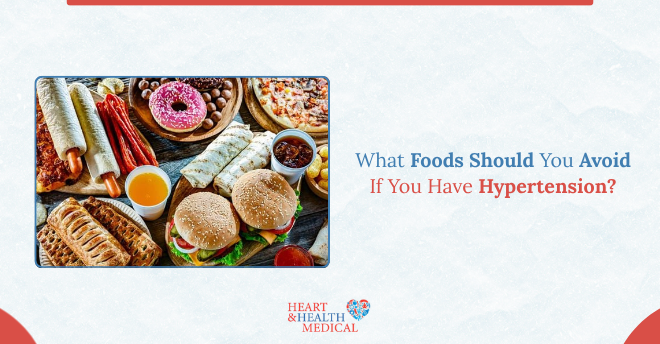
Hypertension (high blood pressure) is a serious health condition that affects millions of people. Many individuals do not experience symptoms, but over time, high blood pressure can damage the heart, brain, kidneys, and blood vessels. It also increases the risk of heart attack and stroke.
The foods you eat can play a major role in managing blood pressure. Some foods help lower blood pressure naturally, while others can make it worse.
At Heart & Health Medical, our physicians educate patients on how daily lifestyle habits affect heart health. We provide personalized guidance, lifestyle support, and medical treatment to help patients successfully manage hypertension.
Below are some of the main foods to avoid if you have high blood pressure.
Why Food Matters for Blood Pressure
What you eat directly affects your heart and blood vessels. Certain foods can cause your body to retain excess water, tighten blood vessels, or contribute to weight gain — all of which may increase blood pressure.
Poor dietary habits may contribute to:
- Weight gain
- High blood pressure
- Diabetes
- Heart disease
At Heart & Health Medical, we help patients make healthier food choices without completely giving up the foods they enjoy.
Foods to Avoid If You Have Hypertension
Salty Foods
Salt is one of the leading contributors to high blood pressure. Sodium causes the body to retain water, which increases pressure on the blood vessels and makes the heart work harder.
Many packaged and processed foods contain hidden sodium.
High-Sodium Foods to Limit or Avoid
- Potato chips and salty snacks
- Fast food
- Frozen dinners
- Canned soups
- Processed meats such as bacon, sausage, and deli meats
- Pickles and packaged sauces
- Instant noodles
Even foods that do not taste salty may contain large amounts of sodium. Reading nutrition labels can help you make healthier choices.
Fresh foods are generally the best option.
Processed Meats
Processed meats are often high in sodium, preservatives, and unhealthy fats, which can negatively affect blood pressure and heart health.
Examples Include:
- Bacon
- Sausage
- Hot dogs
- Ham
- Salami
- Pepperoni
Healthier protein choices include:
- Chicken
- Fish
- Turkey
- Beans
- Lentils
These foods provide important nutrients while supporting heart health.
Fast Food
Fast food is convenient, but it is typically high in sodium, unhealthy fats, and calories. Eating fast food regularly may contribute to weight gain and worsen hypertension.
Foods to Limit:
- Burgers
- French fries
- Fried chicken
- Pizza
- Fried sandwiches
Preparing meals at home allows you to better control the amount of salt and fat in your diet and supports overall heart health.
Sugary Foods and Drinks
Excess sugar intake may contribute to weight gain and elevated blood pressure. Sugary beverages are especially harmful because they add calories without helping you feel full.
Foods and Drinks High in Sugar
- Soda
- Sweet tea
- Energy drinks
- Candy
- Cakes and pastries
- Sugary breakfast cereals
- Ice cream
Water is the healthiest beverage choice. Low-fat milk can also be a good option. Fresh fruit is a healthier alternative for dessert.
Fried Foods
Fried foods are typically high in unhealthy fats and calories. Eating them frequently may increase the risk of obesity, high cholesterol, and heart disease.
Common Fried Foods
- Fried chicken
- French fries
- Onion rings
- Fried fish
- Fried snacks
Instead, choose foods that are baked, grilled, or steamed whenever possible.
Foods High in Unhealthy Fats
At Heart & Health Medical, we educate patients on how saturated and trans fats can damage blood vessels over time.
Foods to Limit
- Butter
- Full-fat cheese
- Cream sauces
- Packaged baked goods
- Margarine containing trans fats
Healthier fats from nuts, seeds, olive oil, and avocados may help support heart health.
Alcohol and Caffeine
Alcohol can increase blood pressure, especially when consumed in excess. Large amounts of caffeine may also affect certain individuals.
Common Sources of Caffeine
- Coffee
- Tea
- Energy drinks
- Soft drinks
Our physicians at Heart & Health Medical recommend monitoring how your body responds to caffeine intake.
Frozen and Packaged Meals
Many frozen and packaged meals are designed for a long shelf life and often contain high amounts of sodium.
Examples Include:
- Frozen pizza
- Packaged pasta meals
- Microwave dinners
- Ready-made rice meals
Freshly prepared homemade meals are generally healthier and better for blood pressure management.
Better Foods for Hypertension
A healthy eating plan can help lower and control blood pressure. One of the most recommended dietary approaches is the DASH diet (Dietary Approaches to Stop Hypertension).
The DASH diet focuses on:
- Fresh fruits
- Vegetables
- Whole grains
- Lean proteins
- Fish rich in omega-3 fatty acids
- Low-fat dairy products
- Nuts and seeds
This style of eating supports heart health and may naturally help reduce blood pressure over time.
At Heart & Health Medical, our cardiologists create personalized nutrition plans, including DASH diet recommendations, to help patients reduce sodium intake and improve heart health.
Healthy Lifestyle Habits That Can Help
Healthy eating is important, but other daily habits also play a major role in controlling blood pressure.
Helpful Habits Include:
- Exercising regularly
- Maintaining a healthy weight
- Getting enough sleep
- Managing stress
- Avoiding smoking
- Taking medications as prescribed
Routine medical visits are also important because blood pressure can change over time.
Personalized Care for Hypertension
Every patient is different. Some individuals may require medication, while others may improve significantly through lifestyle changes and nutritional support.
At Heart & Health Medical, we help patients understand their blood pressure and make healthier choices in a simple, supportive way.
We offer:
- Comprehensive heart evaluations
- Personalized nutrition guidance, including DASH diet plans
- Health coaching and lifestyle counseling
- Blood pressure monitoring and follow-up care
Our goal is to make heart care simple, effective, and easy to follow.
Final Thoughts
High blood pressure is serious, but it can often be managed successfully through healthier lifestyle choices.
Reducing sodium, sugar, unhealthy fats, and fried foods can make a significant difference over time. Even small daily changes may lead to lasting improvements in heart health.
The physicians at Heart & Health Medical are here to help guide you toward healthier habits and better blood pressure control. Schedule an appointment today to take the next step toward a healthier heart.
Frequently Asked Questions
Can losing weight help lower blood pressure?
Yes. Losing excess weight may help lower blood pressure and reduce strain on the heart.
How often should I check my blood pressure?
At Heart & Health Medical, we recommend regular blood pressure monitoring based on each patient’s individual health condition and risk factors.