
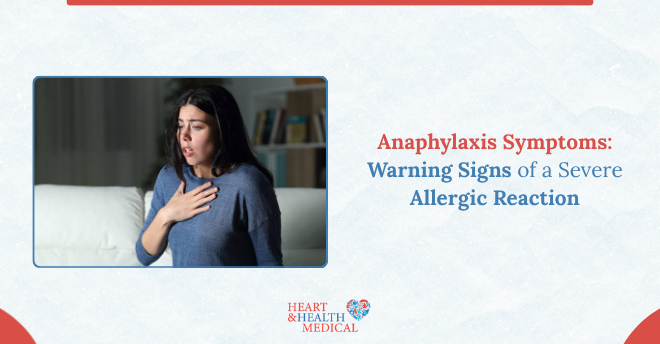
Anaphylaxis Symptoms: Warning Signs of a Severe Allergic Reaction
What Is Anaphylaxis?
Anaphylaxis is a severe, life-threatening allergic reaction that can develop within minutes after exposure to an allergen. It occurs when the immune system rapidly releases chemicals, including histamine and other inflammatory mediators, causing symptoms that can affect multiple organ systems. Without prompt treatment, anaphylaxis can progress to shock, loss of consciousness, and death.
Early Warning Signs
- Red, itchy hives or flushing (although hives may be absent)
- Swelling of the lips, tongue, throat, or face
- Difficulty breathing, wheezing, persistent coughing, or trouble swallowing
- Dizziness, fainting, confusion, or a rapid weak pulse
- Nausea, vomiting, diarrhea, or severe abdominal cramps
What To Do Immediately
If you suspect anaphylaxis, use an epinephrine auto-injector immediately if available and call 911. Do not wait for symptoms to worsen. Even if symptoms improve after epinephrine, emergency evaluation is still required because a second (biphasic) reaction may occur several hours later.
Common Triggers
- Foods (peanuts, tree nuts, shellfish, fish, milk, eggs)
- Medications
- Bee, wasp, yellow jacket, and fire ant stings
- Latex
How Heart & Health Medical Can Help
Our Allergy & Immunology specialists provide comprehensive allergy evaluations, skin and blood testing, asthma management, allergy shots (immunotherapy), and personalized treatment plans for children and adults.
When to Schedule an Allergy Evaluation
- Food reactions
- Frequent hives
- Swelling after insect stings
- Unexplained breathing problems
- Asthma symptoms
- Frequent sinus infections
- Persistent eczema or itchy skin
Frequently Asked Questions
Can anaphylaxis occur without hives?
Yes. Breathing difficulty, throat swelling, dizziness, or low blood pressure may occur without any rash.
Should I always go to the emergency room after using an epinephrine auto-injector?
Yes. Observation is important because symptoms can recur.