
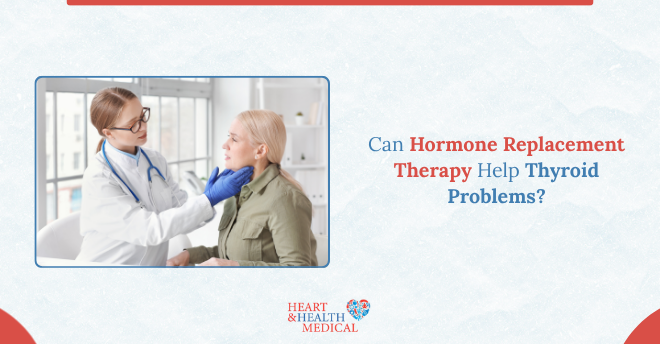
Do you feel tired all the time? Have you gained weight or have trouble thinking clearly? You may think it is because you are getting older. But sometimes, your thyroid may be the reason. Thyroid disorders and hormone imbalances have many similarities and it’s easy to mistake one for the other.
At Heart & Health Medical, our team provides on-site thyroid function testing and metabolic screenings at our Long Island offices. With this, we can design a targeted treatment plan to get you healthy safely and effectively.
You may have heard about Hormone Replacement Therapy (HRT) as a treatment for hormone-related symptoms. But can hormone replacement therapy help thyroid problems?
Let’s take a closer look.
Understanding the Thyroid and Its Hormones
The thyroid gland in your neck produces hormones that regulate body functions. It makes two main hormones:
- T3 (Triiodothyronine) is the active hormone that helps regulate metabolism, energy, and body temperature.
- T4 (Thyroxine) is produced in larger amounts and is converted into T3 as your body needs it.
These hormones work together to regulate many important body functions. Another hormone called TSH (Thyroid Stimulating Hormone) is made by the pituitary gland and tells the thyroid how much hormone to produce.
When these hormone levels become unbalanced, thyroid disorders may develop.
The most common thyroid problems include:
- Hypothyroidism, where the thyroid produces too little hormone
- Hyperthyroidism, where the thyroid produces too much hormone
Other thyroid problems include:
- Thyroid nodules
- Goiter
- Hashimoto’s disease
- Graves’ disease
Each problem needs the right treatment.
Common Symptoms of Thyroid Problems
If your thyroid is slow, you may have:
- Constant tiredness
- Weight gain
- Dry skin
- Hair thinning
- Cold intolerance
- Depression
- Memory problems
- Slow heart rate
- Constipation
- Muscle weakness
If your thyroid is too active, you may have:
- Weight loss
- Rapid heartbeat
- Anxiety
- Trouble sleeping
- Sweating
- Shaking hands
- Frequent bowel movements
- Feeling hot all the time
Thyroid Problems vs. Menopause
Many symptoms overlap, including:
- Fatigue
- Weight changes
- Brain fog
- Mood swings
- Sleep problems
Healthcare providers often recommend thyroid testing. This is because these conditions have similar symptoms. They don’t want to assume menopause is the only cause.
What Is Hormone Replacement Therapy?
Hormone Replacement Therapy (HRT) replaces hormones that decrease with age or medical issues.
Depending on the patient, HRT may include:
- Estrogen
- Progesterone
- Testosterone
HRT is commonly used to relieve symptoms such as:
- Hot flashes
- Night sweats
- Low energy
- Mood changes
- Sleep problems
- Low libido
- Vaginal dryness
Can Hormone Replacement Therapy Help Thyroid Problems?
The simple answer is not usually.
If your symptoms are caused by an underactive thyroid, replacing estrogen or testosterone will not correct the thyroid hormone imbalance.
Instead, people with thyroid disease often need thyroid hormone replacement therapy instead.
This treatment replaces the hormone that the thyroid cannot make.
The first step is finding out which hormone is low.
Why Proper Testing Matters before Starting Treatment
Many symptoms of hormone imbalance and thyroid disease look almost identical.
Without testing, it is impossible to know which condition is causing your symptoms.
At Heart & Health Medical, we take a complete approach by performing comprehensive thyroid function testing before making treatment decisions.
Our testing includes:
- TSH (Thyroid Stimulating Hormone)
- Free T3
- Free T4
These tests give us a detailed picture of how well your thyroid is functioning.
We also do metabolic screenings. This helps us understand your health and spot any issues that affect your energy, metabolism, or weight.
How Thyroid Hormone Replacement Therapy Works
If tests show your thyroid is underactive, you might need thyroid hormone replacement therapy.
Thyroid hormone replacement differs from traditional HRT. It gives you the hormone your thyroid can’t produce enough of anymore.
The aim is to safely and gradually restore healthy hormone levels.
When properly managed, treatment may help improve:
- Energy
- Mental clarity
- Weight management
- Body temperature regulation
- Mood
- Heart function
- Digestive health
- Overall metabolism
Because every patient is different, treatment should always be personalized.
How Personalized Thyroid Treatment Makes a Difference
No two patients experience thyroid disease in the same way.
At Heart & Health Medical, our endocrinology and internal medicine teams look at:
- Your symptoms
- Your health history
- Your lab results
- Your overall health
If you have a thyroid problem, we create a treatment plan that fits your needs.
If your symptoms are caused by another hormone problem, we will recommend the right hormone treatment instead.
Our goal is to treat the real cause of your symptoms.
Benefits of Early Thyroid Diagnosis
Finding thyroid problems early offers many advantages.
Proper treatment may help:
- Increase daily energy
- Support healthy metabolism
- Improve focus and memory
- Reduce cholesterol risks
- Protect heart health
- Improve mood
- Promote healthy weight management
- Enhance overall quality of life
Monitoring helps ensure your treatment works as your needs change.
Final Thought
Hormone Replacement Therapy can help people with menopause and other hormone problems. However, it does not treat most thyroid diseases.
If you feel tired, gain weight without a reason, have brain fog, or notice mood changes, thyroid testing can help find the cause.
Our highly trained endocrinology and internal medicine staff at Heart & Health Medical offers on-site thyroid testing, metabolic screens and customized treatment options so you can get healthy again safely and effectively.
Book your appointment today and get on the first step to feeling your best!
FAQs
How can I tell if my thyroid is causing my symptoms?
The best way is to have thyroid blood tests. These tests measure TSH, Free T3, and Free T4.
How often should my thyroid be checked?
It depends on your health and your treatment. Our healthcare provider will tell you when you need your next thyroid test.